
Beyond their academic workload, many Technion students have also been called to serve as reservists during wartime. University life is demanding even in ordinary times, and balancing it with military duty adds another layer of challenges for these students. To better understand that experience, we spoke with R, a fourth-year mechanical engineering student, about the challenge of navigating both student life and reserve service (miluim).
Can you briefly introduce yourself: your name, faculty, and year at the Technion? How many semesters have you been in the miluim?
My name is R, I’m 29 years old, and I’m a fourth and (hopefully) last year Mechanical Engineering undergraduate student.
I’ve been doing miluim since the beginning of my degree. Usually, when there’s no war, it’s just a week or two during the semester break or on the weekends. When the “Swords of Iron” war started, I was called up for six months and spent almost that entire Winter semester in uniform. After that, I did a month of reserve duty during Operation “Rising Lion”. Right now, I’ve been in miluim since the start of Operation “Roaring Lion”, and I won’t be released until it’s over.
What has been the biggest challenge of balancing miluim with classes, assignments, labs, projects and exams?
The absolute hardest thing is sitting down to study for an exam right after coming back from the field. All I really want to do is to take a shower and go to sleep, but I know that if I don’t put in those two hours right then, I won’t pass.
It’s also really hard to actually concentrate during miluim. Even during “dead time” when it seems quiet, you can’t get into a “study flow”. If there’s a mission, nobody cares about your exams or projects, the mission comes first. You drop everything instantly and go. Jumping from 0 to 100 in a split second, dozens of times a day, is exhausting and honestly the hardest part. Your train of thought is constantly broken, and you just have to get used to picking up where you left off.
Beyond that, there’s a constant mental pressure. My friends and I describe it as feeling like “death is whispering in your ears”. It’s that basic existential fear that we, human beings, always have, but it’s much stronger in miluim. With that “whisper” in your ears, focusing on assignments and solving PDEs is a whole lot harder, (R said so while laughing).
How supportive have lecturers, TAs, and the Technion been during this period?
Personally, I’ve never experienced a lack of understanding from the teaching staff. In my faculty - Mechanical Engineering, there are many reservists among the TAs and even the lecturers. Most of them served in combat units and completely understand the difficulties I’m going through.
However, as an Academic Coordinator of my faculty, I see the bigger picture, and I’ve heard stories from other faculties about lecturers who are less accommodating.
What do you do as an Academic Coordinator?
I basically act as a bridge between the students, the staff, and the Dean. I try to make sure the academic side of things runs properly, like sorting out problems that pop up during the semester and building the exam schedules.
But it’s really important for me to say that I definitely don’t work alone. I work closely with the semester representatives, especially when it comes to coordinating the exam schedules. They are also undergraduate students and they do an incredibly hard and important job completely voluntarily, just because they genuinely want to help the students - all while dealing with the regular stress of their own studies. I also work a lot with the faculty secretariat. They do an outstanding job and are always there to help me with every step and every task.
At the end of the day, we all work together behind the scenes to solve problems and make students’ lives go a bit more smoothly, especially these days when so many reservists need help and accommodations. I really hope this interview is a good place to just say: guys, you’re the absolute best. Thank you from the bottom of my heart!
Beyond missed coursework, how has this switch between duty and campus life affected you personally?
I sleep terribly at night. After an intensive period of reserve duty, it takes me months to calm down and get back to myself. I overreact to every loud noise. I also notice that I have a lot less emotional capacity for people in general, and my friends in particular. I become less empathetic and caring about their problems for a while. It’s like your soul grows a rough, thick skin to protect itself from getting hurt, and it takes time for it to soften up again. It’s like I’m getting dumber in terms of emotional intellect. It’s hard to explain, but I think it makes sense.
Like I mentioned earlier, your train of thought in miluim is short and fragmented, but academia demands the exact opposite. You need a long, continuous focus to study subjects deeply, and you lose that ability the more time you spend in the army. The lack of sleep obviously makes concentrating even harder. Personally, I have to take sleeping pills at night, relaxants like Valerian during the day, and focus pills for months after getting back, even though I normally never have issues with sleep, anxiety, or concentration.
I guess I’m not “progressive” enough to see a psychologist, though I know that with psychological help, all these “side effects of war” would pass faster. For me, what actually helps is hitting the gym for heavy strength training until my brain just shuts off, and doing some self-reflection, exactly like answering these questions for your interview right now.
Do your classmates help you keep up and understand what you go through?
My friends always help me out. Most of them are reservists too, so they completely understand what I’m going through, even when they aren’t called up themselves. Overall, I haven’t experienced any lack of understanding from my classmates or peers.
Despite everything, what helps you keep going with your studies?
On a practical level, it’s about trying to find a quiet place to study, or taking advantage of quiet night shifts. When nothing is going on, you can open a book and know you have half an hour or an hour to yourself, without someone suddenly throwing a task at you that completely ruins your focus.
I admit that right now, I’m barely managing to study. At the beginning of miluim I tried, but eventually, I just gave up because it’s really hard and sometimes just impossible. But now (at the end of March) the postponed exam period is getting closer, so I made a deal with myself: I promise to sit down for at least an hour or two every day to focus on the courses with the closest exams.
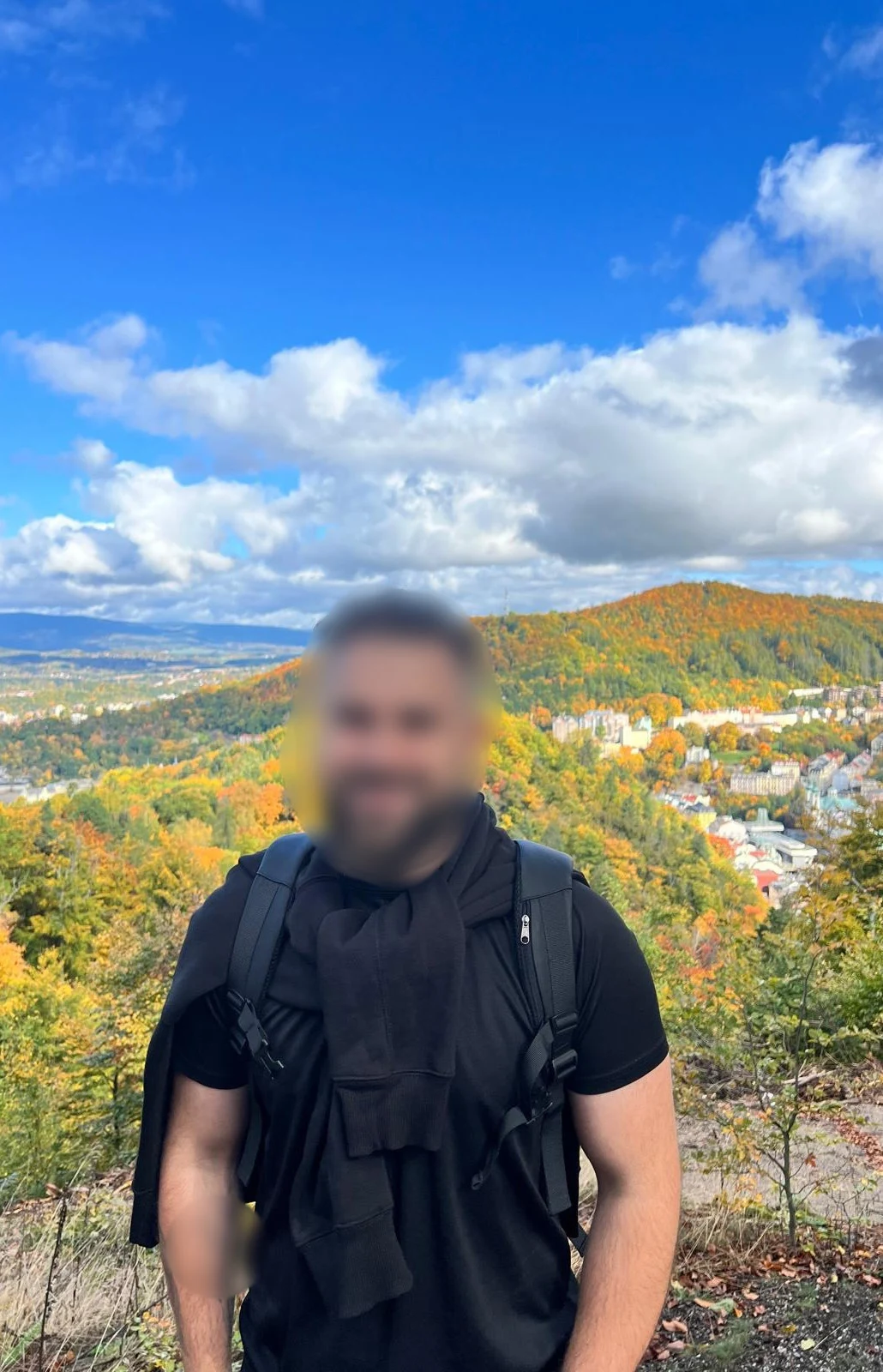
Is there anything about this experience that has changed the way you see life or your future plans?
Look, after you get used to living with that ‘whisper of death’ in your ears and constantly jumping from 0 to 100, your perspective changes completely. Normal university, working or daily life stress suddenly seems way less critical.
This ‘pause’ the war has forced on us is actually an opportunity to look around. Usually, our routine is like driving a car, you just get a ‘tunnel vision’. Only when everything suddenly stops can you really open a map and check if you’re even heading in the right direction in your life.
These tough times really shine a light on what’s truly important. It’s not the crazy daily rush of urgent tasks, but your friends, your family or just saying a kind word to a neighbor in the shelter, or being forgiving and letting someone pass you on the road because you realize everyone is going through a hard time.
As for my future plans, this experience mostly made me realize that I just want to finish my degree and get to a quiet, drama-free routine (or am I just getting older?). Finding the good in the middle of all this chaos is my biggest takeaway, and honestly, it gives me a lot of hope.
The answers from R’ offer a candid look at what reserve duty can mean for students beyond missed classes and postponed exams. It is a reality shaped by exhaustion, interrupted routines, and personal adjustment, but also by mutual support from classmates, academic staff, and the wider faculty community. His experience captures both the weight of this period and the determination with which many Technion students continue to move forward.
Join the conversation
Comments are reviewed before appearing. Your display name and comment may become public if approved. Email is optional, never displayed, and is erased when moderation is completed.